OTA Commission vs Direct Booking: Where Does a Hotel Make More Money?
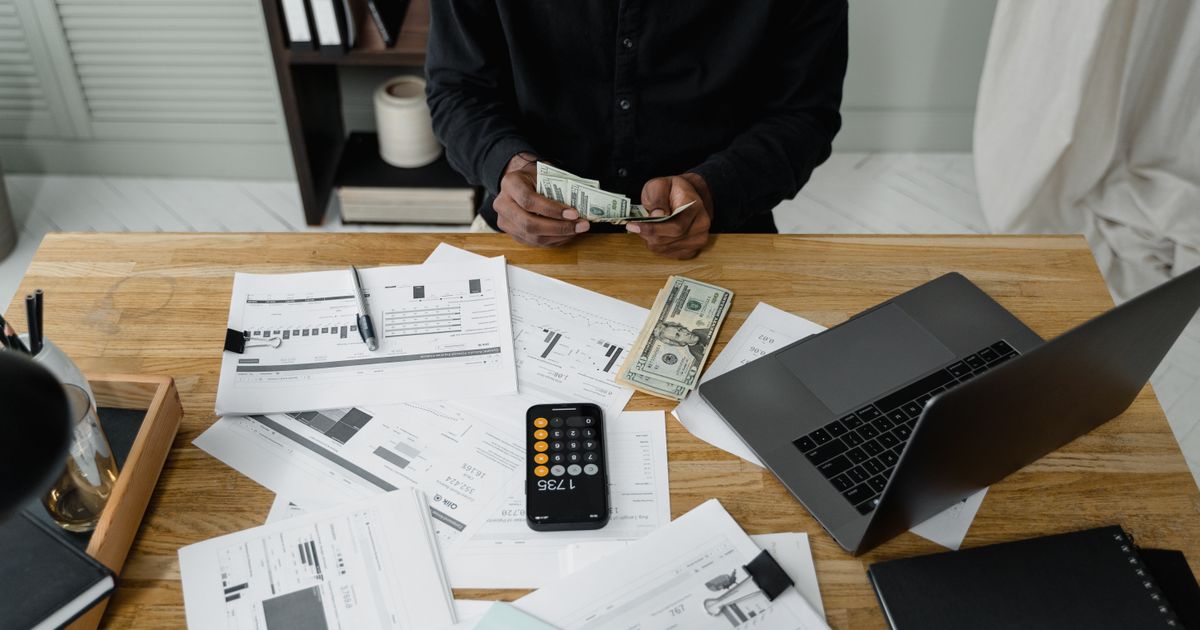
Two guests book the same room for ₹5,000 a night. One comes through an OTA, one books direct on your website. On the surface, same revenue. In your bank account, not even close. This guide walks through the real math — commission, the costs of going direct, and the lifetime value most owners never count — so you can decide how much of your business each channel actually deserves.
The short version: on the same rate, direct almost always wins on profit. But OTAs still do a job direct can't. The goal isn't to fire the OTAs — it's to stop paying commission on guests you already own.
The commission math, line by line
Say the OTA charges 18%. On that ₹5,000 booking, ₹900 goes to the platform before you've paid for a single towel. The direct booking keeps that ₹900. Over a month of even modest volume, the gap between the two channels can fund a staff salary.
Here's the same booking side by side. These are illustrative assumptions to show the mechanics, not an industry statistic — plug your own numbers into the calculator below.
- OTA booking (₹5,000 at 18%): ₹900 commission → you keep ₹4,100 before room costs.
- Direct booking (₹5,000 at 2.5% payment fee): ₹125 in fees → you keep ₹4,875 before room costs.
- Difference per booking: roughly ₹775 more in your pocket, on the exact same room and rate.
Scale that up: 10 rooms, 60% occupancy, and even a third of those nights shifted from OTA to direct is tens of thousands of rupees a month that never leaves your account.
OTA vs direct booking, side by side
| Line item | OTA booking | Direct booking |
|---|---|---|
| Room rate | ₹5,000 | ₹5,000 |
| Platform commission (18%) | −₹900 | ₹0 |
| Payment processing (2.5%) | Often included | −₹125 |
| Net before room costs | ₹4,100 | ₹4,875 |
| Guest contact data | Masked / withheld | Yours to keep |
| Next booking cost | Another commission | Near zero (WhatsApp/email) |
Illustrative assumptions to show the mechanics, not an industry statistic. Use the calculator below for your own numbers.
What do OTAs actually charge?
There's no single OTA rate. Commission is negotiated and varies by platform, market, property type, and any visibility or "preferred partner" programs you opt into. These are commonly cited ranges, not fixed prices — always check your own contract:
| Platform | Typical commission range | Notes |
|---|---|---|
| Booking.com | ~15% base, higher with visibility programs | Sponsored/"Preferred" placement adds to it |
| Expedia Group | ~15–25% | Varies by package and market |
| Agoda | ~15–25% | Often higher in some Asian markets |
| MakeMyTrip / Goibibo (India) | ~15–22% | Varies by contract and promotions |
| Airbnb | Host-only ~14–16%, or split-fee | Depends on the fee structure you choose |
Two contract models are worth knowing:
- Commission model: you publish a rate; the OTA deducts a percentage after the stay. This is the most common setup.
- Merchant / net-rate model: you give the OTA a net rate and they mark it up, keeping the difference. Your headline rate on that channel is out of your hands, and rate parity can still apply.
But direct isn't free — the honest comparison
A direct booking still has costs. You pay for your booking engine, payment processing of 2-3%, and whatever marketing brought the guest to your site. So the honest comparison isn't "commission vs zero." It's "15-25% variable commission vs a much smaller, mostly fixed cost you control."
The difference is who the cost scales with. OTA commission grows with every booking — the more you sell, the more you pay. Your booking engine costs roughly the same whether you take 20 direct bookings a month or 200. Past a certain volume, direct isn't just cheaper per booking; the marginal cost of the next one is almost nothing.
A quick break-even: if your booking engine costs a fixed amount each month, it's paid off by the commission you save on just a handful of direct bookings. Every direct booking after that is almost pure margin — the opposite of commission, which grows with every sale.
The hidden OTA costs nobody invoices you for
Commission is the visible price. There are three quieter ones:
- Rate parity clauses limit how much cheaper you can go on your own site, so your best price often isn't your own.
- You don't own the guest. The OTA keeps the email and the relationship; you get a masked address and a checkout date.
- The billboard effect cuts both ways. OTAs do send you exposure — but travellers routinely find you there, then search your name to book direct. If your own site can't close that booking, the OTA collects commission on a guest they didn't really win.
The part everyone forgets: lifetime value
The OTA booking ends when the guest checks out — and to reach that guest again, you pay another commission. The direct booking gives you the guest's contact details, so the next stay can be a WhatsApp message away at zero commission.
Follow one guest over three years. Booked via OTA every time at ₹5,000 and 18%, that's ₹900 in commission per stay. Convert them to direct after the first visit and every repeat stay keeps that ₹900. A guest who returns even twice a year is the difference between renting a customer and owning one. Direct bookings compound; OTA bookings reset.
| Scenario | Stays | Commission each | 3-year commission paid |
|---|---|---|---|
| Always via OTA (18%) | 6 (2/yr) | ₹900 | ₹5,400 |
| OTA first, direct after | 6 (2/yr) | ₹900 once | ₹900 |
Illustrative. Convert one loyal guest to direct after their first stay and you keep ₹4,500 over three years that would otherwise go to the platform.
So which channel wins?
Direct, on profit per booking and on lifetime value. But OTAs win at something direct can't: reaching a traveller who has never heard of you. The answer isn't to pick one — it's to use each for what it's good at.
- Use OTAs as paid acquisition to win first-time guests and fill distressed inventory.
- Capture guest data on that first stay — email, phone, and a reason to come back.
- Convert to direct for every stay after — where the real margin lives.
A healthy independent hotel doesn't obsess over hitting zero OTA bookings. It works to lower its OTA dependency over time, so the channel becomes a top-up rather than the whole business. For the step-by-step playbook, see Direct Booking for Hotels: The Complete Guide.
How to shift the mix without losing bookings
Cutting OTAs cold turkey is how hotels lose a season. Shift the mix instead — the full playbook is in how to reduce OTA commission:
- Give a real reason to book direct — a small perk, flexible cancellation, or best-rate promise that still costs you less than commission.
- Capture and follow up with every guest, then bring them back over WhatsApp at zero commission.
- Read the deeper case for cutting reliance in how to reduce your OTA dependency.
The takeaway
A ₹5,000 direct booking is worth more than a ₹5,000 OTA booking — today in margin, and far more over the guest's lifetime. A connected platform makes the shift practical: capture every guest, power commission-free direct bookings, and turn one-time OTA guests into repeat direct ones.
OTA Commission Calculator
See what OTA commissions cost you each year — and what shifting some bookings to direct could save.
These are example calculations based on the numbers you enter — not industry averages or guaranteed results.
What does this mean?
Your result shows the potential cost of OTA dependency. The next question is how much of that demand you could move to direct bookings — where the commission stays with you.
From the field
Having built the booking stack for independent Indian hotels, the mistake I see most is owners comparing the headline room rate on an OTA against their own site — and missing that the real comparison is take-home per booking after commission, promo funding and payment costs. The same ₹5,000 room nets very different amounts by channel, and that gap, repeated across a year, is usually the single biggest swing in a small hotel's profit.
Take-home on the same ₹5,000 room night, by channel
| Channel | Typical commission | You keep on ₹5,000 |
|---|---|---|
| Your own site (direct) | ~2% gateway only | ~₹4,900 |
| Booking.com | 15–20% | ~₹4,125 |
| Agoda | 15–22% | ~₹4,075 |
| MakeMyTrip / Goibibo | 15–25% | ~₹4,000 |
The headline room rate is identical; the take-home is not. A ~₹800–900 gap per booking, repeated across a year of stays, is usually the single biggest swing in a small hotel's profit — and it is why the mix between channels matters more than any one rate.
Commission bands follow published 2026 India OTA partner terms; visibility/promo funding adds ~3–5 points in practice. Direct assumes a ~2% payment-gateway cost. Net figures are arithmetic on the mid-band.
Build your direct-booking engine
Turn commission savings into a real direct channel.
Frequently asked questions
Is a direct booking always more profitable than an OTA booking?
On the same rate, yes — a direct booking saves the 15-25% commission, so more of it is profit. The nuance is acquisition cost: OTAs bring you guests you might never have reached. The smart move is to use OTAs to win first-time guests, then convert them to direct for every stay after.
What does a direct booking actually cost the hotel?
Not zero, but usually far less than an OTA commission. You pay for your booking engine, payment processing (2-3%), and any marketing to attract the guest. Even after those, a direct booking typically keeps 10-20 percentage points more margin than the same OTA reservation.
Should I discount to get direct bookings?
A small direct-only perk or discount often pays for itself, because it still costs less than the commission you'd otherwise pay. Free breakfast, a room upgrade, or flexible cancellation can tip the guest to book direct without eroding your rate the way a deep discount would.
How much commission do OTAs charge hotels?
Most OTAs charge roughly 15-25% per booking, but the exact rate depends on the platform, your market, property type, and whether you join visibility or preferred-partner programs. Some also use a net-rate model where they set the markup on a rate you supply. Always confirm the figure in your own contract rather than assuming a headline number.
Are OTAs worth it for a small independent hotel?
Yes, as paid acquisition. OTAs put you in front of travellers who would never find you otherwise, which is valuable when you're new or filling last-minute gaps. The mistake is letting them become your entire channel — capture each guest's details on that first stay and bring repeat business direct, where you keep the commission.
Share this article