IoT in Hotels: What Smart Rooms Actually Do for Guests and Owners
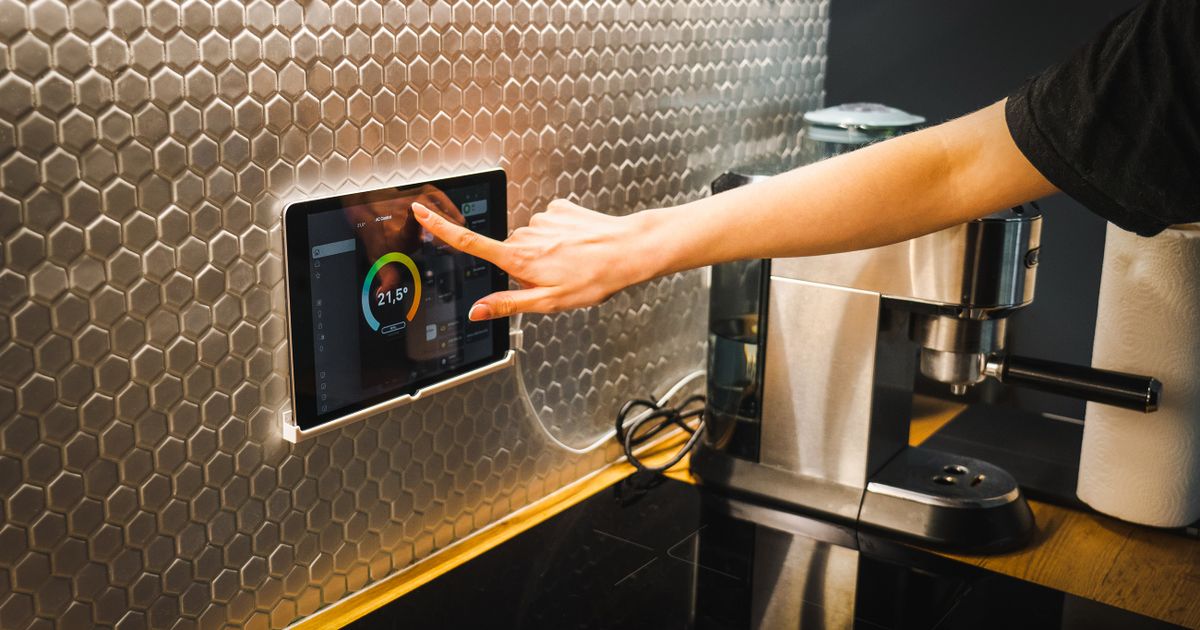
“Smart hotel” brings to mind voice assistants, curtains that open on command and a tablet that controls everything. Some of that is useful; much of it is a gimmick. The real value of the Internet of Things (IoT) in hotels is quieter: rooms that stop wasting electricity when nobody is in them, leaks spotted before they ruin a ceiling, and air conditioners repaired before a guest complains.
This guide explains what IoT actually does in a hotel, where it pays for itself, the risks owners overlook, and how an independent Indian property can start without a large budget.
What “IoT” means in a hotel
IoT simply means devices that are connected to a network and can report or act on information. In a hotel that typically includes:
- Smart locks and mobile keys — guests open their door with a phone, and access can be granted or revoked remotely.
- Occupancy sensors — motion, door and keycard sensors that know whether a room is occupied.
- Connected AC and lighting — controlled automatically by occupancy, time or a central system.
- Energy and water meters — measuring consumption by room, floor or department.
- Leak, smoke and temperature sensors — in bathrooms, kitchens, cold rooms and plant rooms.
- Equipment monitors — on pumps, boilers, lifts and generators, to flag problems early.
1. Energy: where IoT usually pays first
Electricity, and air conditioning in particular, is one of the largest controllable costs for most Indian hotels. The classic waste is a room where the guest has gone out for the day with the AC running, or an empty room that housekeeping left cooling after cleaning.
Occupancy-based controls fix this. When sensors detect the room is empty, the AC moves to an energy-saving temperature and lights switch off; when the guest returns, the room returns to their settings. Unsold rooms can be kept in a deep set-back until shortly before check-in.
Here is an illustrative example — use your own tariff and usage. Suppose a 30-room hotel’s rooms each run an AC for roughly four hours a day while nobody is inside, the AC draws about 1.5 kW, and electricity costs ₹9 per unit. That is 30 × 4 × 1.5 × ₹9 = ₹1,620 a day, or close to ₹6 lakh a year, spent cooling empty rooms. Even recovering part of that is a meaningful saving.
Start here
2. Maintenance: fix it before the guest notices
A failing AC compressor, a slowly leaking pipe or a cold-room fridge drifting warm all give warning signs before they fail. Sensors that track temperature, vibration, power draw or water flow can alert your maintenance team early — so the repair happens on a Tuesday afternoon, not at midnight with a guest in the room. Leak sensors in bathrooms, under water tanks and in kitchens are inexpensive and can prevent very expensive damage.
3. Guest experience: convenience, not gadgets
The guest-facing benefits that matter most are the ones that remove friction:
- Mobile check-in and digital keys, so a late-arriving guest can go straight to the room. See how QR and digital tools improve guest experience.
- A room that is ready — cooled or warmed before arrival.
- Simple controls — clear, labelled switches or a phone-based control that is easier than the wall panel, not harder.
- Faster service, because housekeeping knows the moment a room is vacated and maintenance knows the moment something breaks.
Avoid technology that guests have to learn. If a guest needs instructions to switch off the bedside light, the system has failed.
4. Operations: real-time room status
When occupancy and door sensors feed into your property management system, the front desk and housekeeping see the real status of every room. Housekeeping can clean rooms as soon as guests leave, rather than knocking on occupied doors, and managers can see which rooms are ready for early check-in. That connects directly to the gains described in our guide to housekeeping automation.
The risks owners overlook
- Security. Every connected device is a potential way into your network. Put IoT devices on a separate network from guest Wi-Fi and your payment and billing systems, change every default password, and keep firmware updated.
- Privacy. Guests are rightly sensitive about sensors in their rooms. Use occupancy sensing, not cameras or microphones, and be transparent about what you collect.
- Vendor lock-in. Choose systems that use open standards and can integrate with your PMS, so you are not stuck with one supplier forever.
- Reliability. Ask what happens when the internet or the vendor’s cloud goes down. Locks and AC must keep working offline.
- Local support. In India, a vendor without a service engineer within reach of your property is a risk, however good the brochure.
A sensible roadmap for an independent hotel
- Measure first. Install energy meters so you know your baseline.
- Pilot on a few rooms. Occupancy-based AC and lighting on five to ten rooms for a couple of months.
- Add low-cost protection. Leak and temperature sensors in high-risk areas.
- Connect to your PMS. Room status and housekeeping alerts in the same system your team already uses.
- Then consider guest-facing upgrades like mobile keys, once the basics run reliably.
The bottom line
IoT in hotels is most valuable when it is invisible: rooms that save energy on their own, problems that get fixed before guests notice, and a team that always knows the real state of the building. Start with energy, measure the results, keep security tight, and add guest-facing features only when they make the stay genuinely easier. It is one part of a broader shift we cover in the future of the hotel industry.
Hotel technology, explained
Frequently asked questions
What is IoT in the hotel industry?
IoT (Internet of Things) means everyday devices — door locks, air conditioners, lights, water meters, sensors — connected to a network so they can report their status and be controlled remotely or automatically. In a hotel, that lets rooms react to whether a guest is present, lets maintenance spot problems early, and lets guests control their room from a phone.
Is IoT affordable for a small hotel?
You do not need a full smart-hotel system to benefit. Many independent properties start with one or two targeted upgrades — occupancy-based AC control, smart energy meters, or leak sensors in high-risk areas — and expand once they see the savings. Prices vary widely, so get quotes for a pilot on a few rooms first.
Is hotel IoT secure?
Only if you set it up carefully. Connected devices are a common way into a network. Keep IoT devices on a separate network from guest Wi-Fi and your billing systems, change all default passwords, keep firmware updated, and choose vendors who provide security updates.
Do guests actually want smart rooms?
Guests rarely choose a hotel because it has IoT. They choose it for comfort, convenience and reliability — a cool room on arrival, no waiting at reception, lights that are easy to use, hot water that works. IoT is worth it when it delivers those, invisibly. A confusing tablet that controls everything is worse than a good light switch.
Share this article