The Rise of Contactless Check-In: Are Hotel Reception Desks Becoming Obsolete?
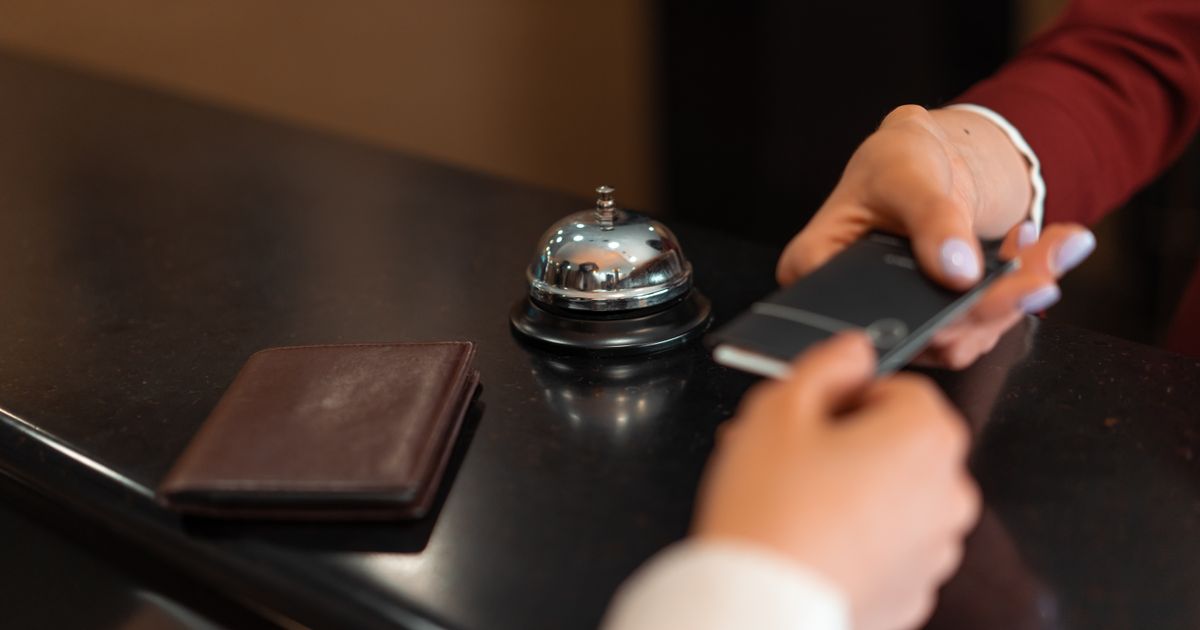
You arrive after a long flight, and instead of a queue there's a QR code, a tap on your phone, and you're in your room. Contactless check-in has gone from pandemic novelty to genuine expectation. So does that mean the front desk — the symbol of hospitality itself — is on its way out? The answer is more interesting than a simple yes. (This overlaps with, but isn't the same as, whether AI will replace the receptionist — that's about the person; this is about the desk and the arrival.)
What contactless check-in actually is
It's the arrival, minus the paperwork. Before you get there, you complete check-in online — details, ID, sometimes payment and preferences. On arrival you either collect a key in seconds or open your door with a digital one. The transactional part of the front desk — forms, card swipes, key cards — moves to your phone. (See the full pre-arrival flow: what happens between booking and check-in.)
Why guests increasingly want it
- Speed. No one enjoys queuing after travelling. Straight to the room is a real win.
- Late arrivals. A digital key means a 2am arrival doesn't depend on a staffed desk.
- Control. Choosing preferences and reading everything in advance beats being rushed at a counter.
Why hotels benefit too
Contactless isn't just a guest perk — it's an operational upgrade. It cuts queues at peak arrival times, reduces errors, captures guest details and ID cleanly, and — importantly — frees staff from repetitive admin. That's labour redirected from processing forms to actually looking after people.
So is the front desk obsolete?
Not obsolete — repurposed. Take away the paperwork and what's left is the part that always mattered: the human welcome, the local tip, the problem solved on the spot, the upsell offered with a smile. Technology is brilliant at the transactional and hopeless at the personal. The desk that survives is the one that stops being a counter and becomes a concierge.
The hotels getting this right offer contactless as a choice. The guest in a hurry taps and goes; the guest who wants a warm welcome gets one. Forcing everyone down one path — all-automated or all-manual — is the actual mistake.
The bottom line
Contactless check-in is here to stay because it removes friction everyone disliked anyway. But it kills the queue, not hospitality. The reception desk isn't dying — it's being freed from admin to do the human work that made guests love hotels in the first place. The smart move isn't choosing between tech and people; it's using tech so your people can be more human.
Frequently asked questions
What is contactless check-in?
It's checking into a hotel without paperwork at the front desk. You fill in your details, upload ID and sometimes pay in advance via a link or QR code, then get a digital key or a quick key handover on arrival. The whole desk formality shrinks to seconds — or disappears entirely.
Are hotel reception desks disappearing?
Some are shrinking, but most aren't vanishing. Contactless check-in removes the boring, transactional part of the desk — forms, payment, key issuance — and frees staff to do what technology can't: welcome guests, solve problems, and make people feel looked after. The desk is changing role, not going extinct.
Do guests actually want contactless check-in?
Many do, especially for speed and late arrivals — no one enjoys queuing after a long journey. But preferences vary: some guests still value a human welcome. The best hotels offer contactless as an option, not an obligation, so each guest gets the arrival they prefer.
Share this article